Air in Your RC Shocks Is Ruining Your Handling — Here’s How to Fix It
If your RC car feels bouncy, harsh, inconsistent, or unpredictable, there’s a good chance the problem isn’t your shock oil weight, spring rate, or driving style.
It’s air trapped inside your shocks.
Improperly bled shocks are one of the most common — and most misunderstood — suspension issues in RC. Many drivers rebuild shocks, top them off with oil, bolt them back on, and assume they’re good to go. In reality, bleeding is the step that determines whether your suspension actually works as designed.
📌 This Guide Explains
What bleeding RC shocks actually does
Why air inside shocks causes handling problems
How to properly bleed shocks step by step
What bleed screws do (and when to use them)
How proper bleeding improves performance across all platforms
🛠️ What Does “Bleeding” RC Shocks Mean?
Bleeding RC shocks is the process of removing trapped air from inside the shock body before sealing it.
Oil-filled shocks are designed to work with:
Incompressible fluid (shock oil)
A sealed internal volume
Controlled piston movement
Air, on the other hand, compresses easily. When air is trapped inside a shock:
Damping becomes inconsistent
Rebound speed varies
Suspension response changes from hit to hit
Bleeding ensures the shock contains oil only, with no compressible air pockets.
⚠️ Why Air in RC Shocks Causes Problems
Air inside your shocks leads to symptoms many drivers mistake for other issues:
Excessive bounce after jumps
Harsh landings despite “correct” oil weight
Shocks returning too fast or too slow
Side-to-side imbalance
Inconsistent handling over rough terrain
On platforms like the Slash 4×4 or Arrma 1/10 vehicles, this often gets misdiagnosed as:
“I need thicker oil”
“These shocks aren’t very good”
“The springs feel wrong”
In reality, even the best shocks won’t perform correctly if they aren’t bled properly.
See our bleeding installation diagram below:

🧰 Step-by-Step: How to Properly Bleed RC Shocks
This method applies to most oil-filled RC shocks, whether you’re working on Slash 4x4 shocks, Arrma 1/10 shocks, or other similar suspension designs.
🔹 Step 1: Fill the Shock with Oil
Remove the shock cap completely
Slowly fill the shock body with oil until it’s just below the top
Move the shaft up and down gently to help oil flow through the piston
Avoid pumping the shaft aggressively — that introduces more air.
🔹 Step 2: Compress the Shaft Fully
Push the shock shaft all the way in
Hold it fully compressed
This step is critical. Compressing the shaft displaces oil and forces trapped air bubbles upward.
🔹 Step 3: Let the Bubbles Rise and Pop
With the shaft still compressed, let the shock sit upright
Wait until all visible air bubbles rise to the surface and disappear
Depending on oil weight, this can take:
30–60 seconds for lighter oils
Several minutes for thicker oils
Patience here directly affects performance.
🔹 Step 4: Top Off the Oil (If Needed)
If the oil level dropped after bubbles escaped, add a small amount
Do not overfill
The goal is a full oil column without excess pressure.
🔹 Step 5: Install and Tighten the Shock Cap
Keep the shaft fully compressed
Carefully thread the cap on
Tighten it snugly, but don’t overtighten
Sealing the shock with the shaft compressed ensures no air is trapped inside.
🔹 Step 6: Check Rebound
Release the shaft and observe how it extends
Typical results:
Slight rebound = common for many setups
Slow return = heavier damping feel
No rebound = fully neutral setup
What matters most is consistency, not a specific rebound amount.
🔩 What About Shocks with Bleed Screws?
Some shocks include a bleed screw in the cap. Its purpose is to:
Release excess oil
Fine-tune internal pressure
Make bleeding more repeatable
🔧 How Bleed Screws Work
Fill the shock normally
Install the cap with the bleed screw loosened
Compress the shaft fully
Excess oil exits through the bleed hole
Tighten the bleed screw while the shaft is compressed
This achieves the same goal: zero trapped air and controlled internal volume.
Bleed screws don’t replace proper technique — they just make the process more precise.
Examples of shocks:

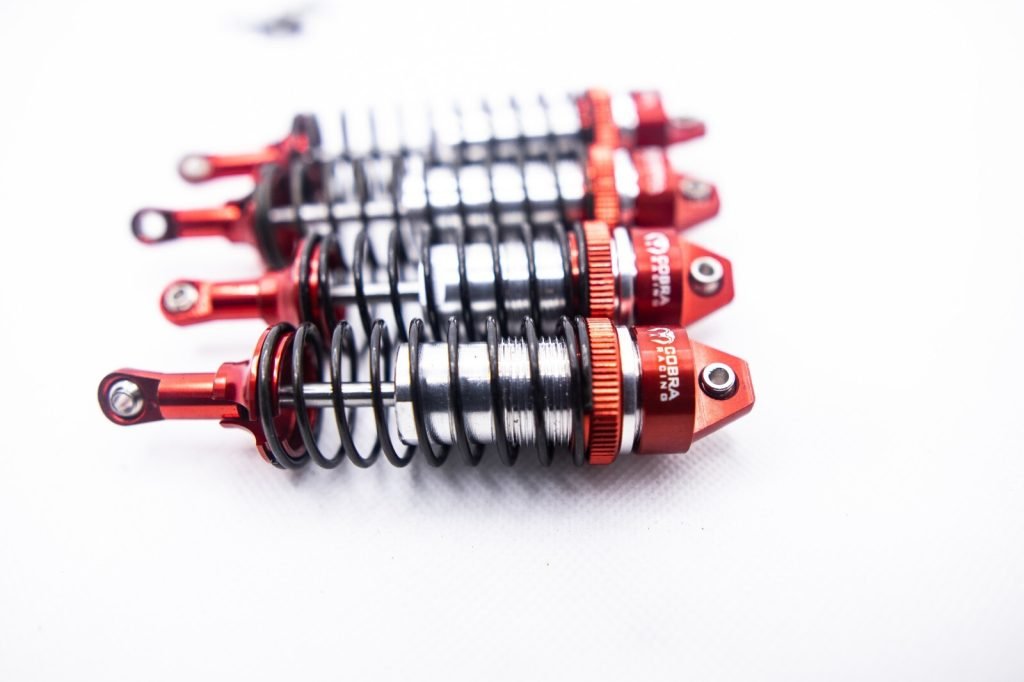
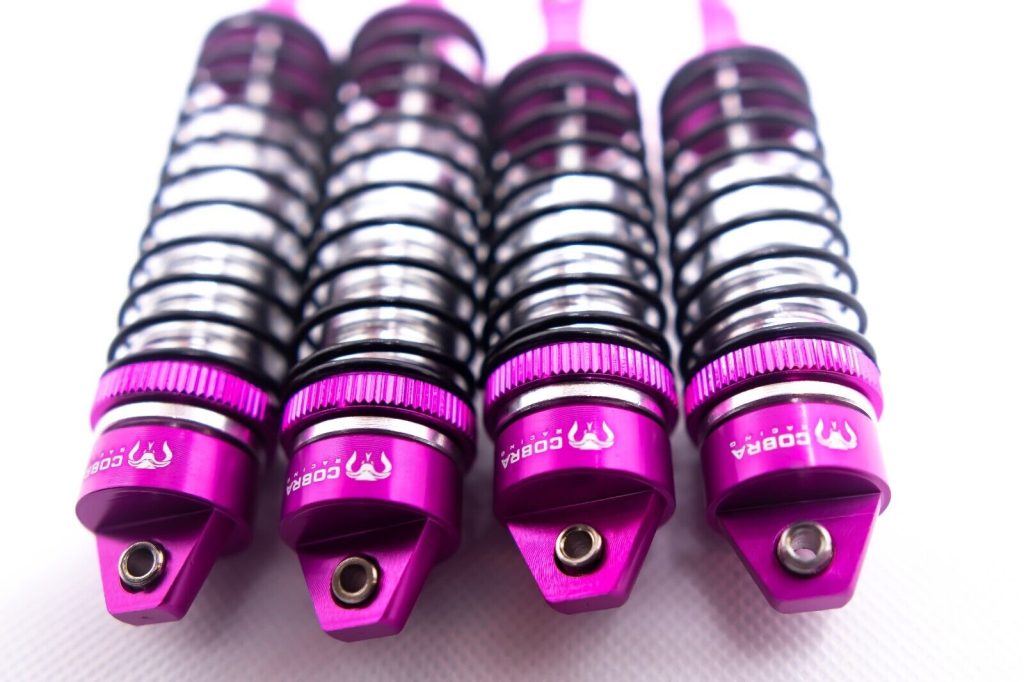
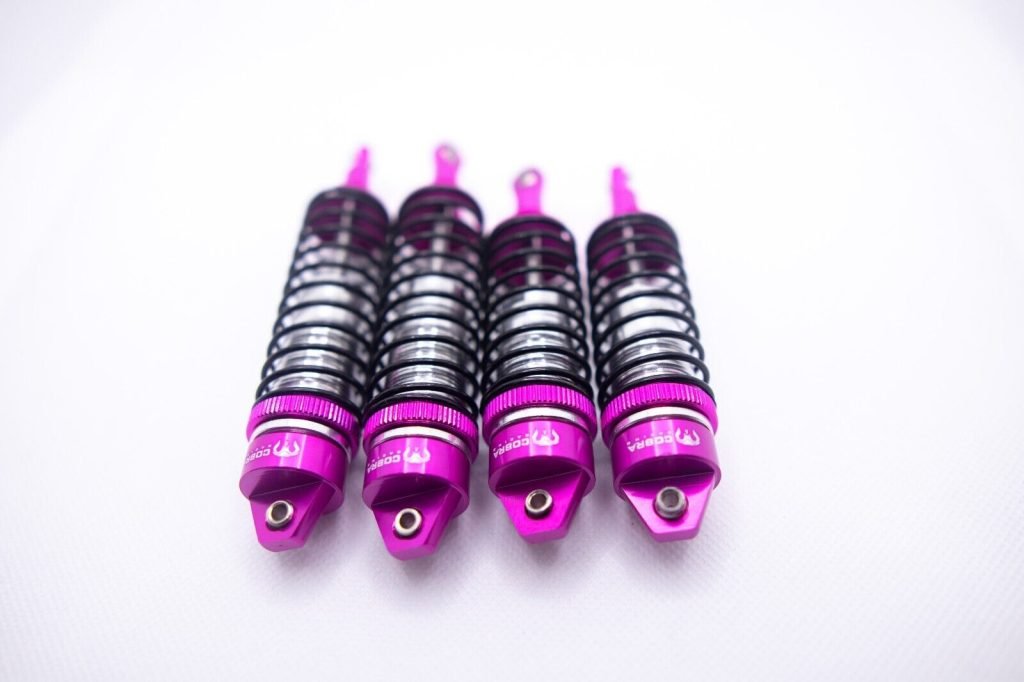
CR Pink Traxxas SLASH Aluminum BIG BORE Front and Rear Adjustable Shock 4X4 2WD
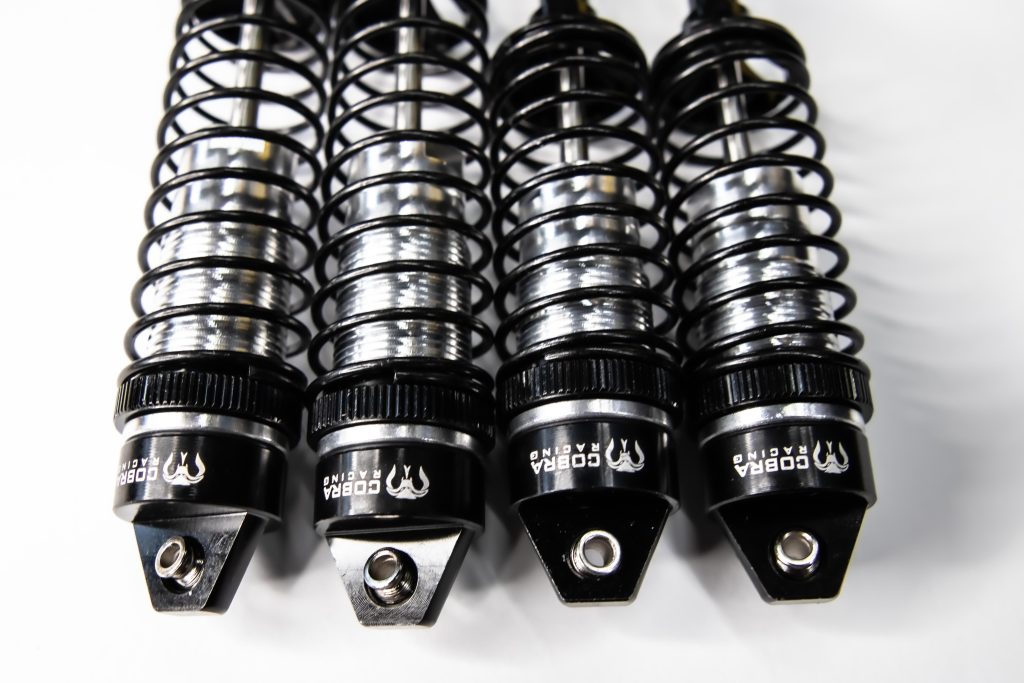
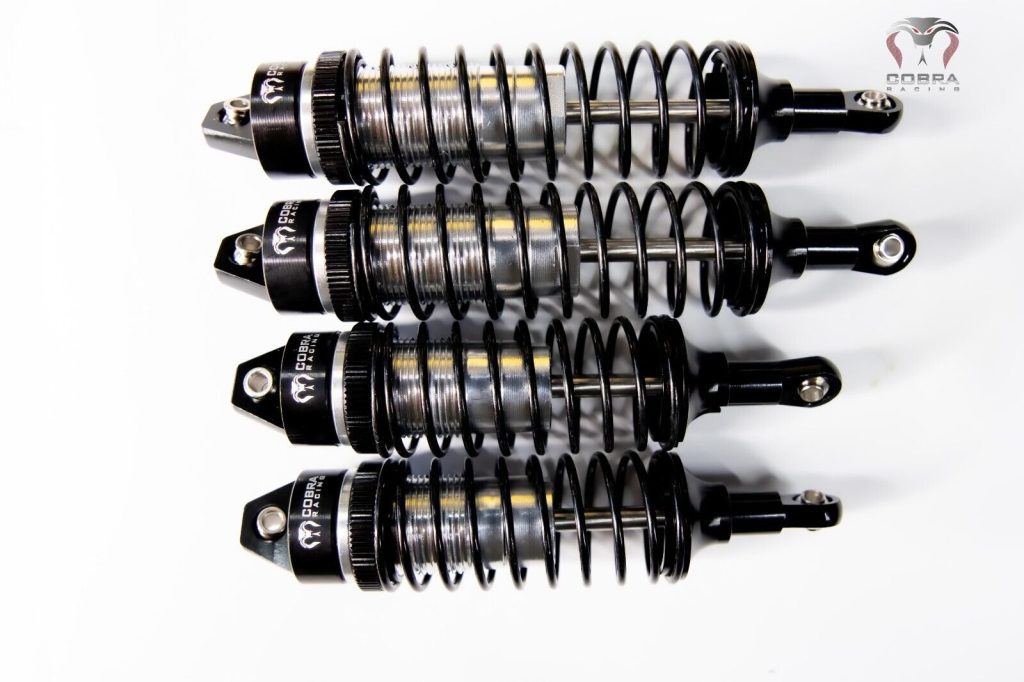
CR Black Aluminum BigBore Shocks fits Traxxas 4×4 2WD (Front and Rear)
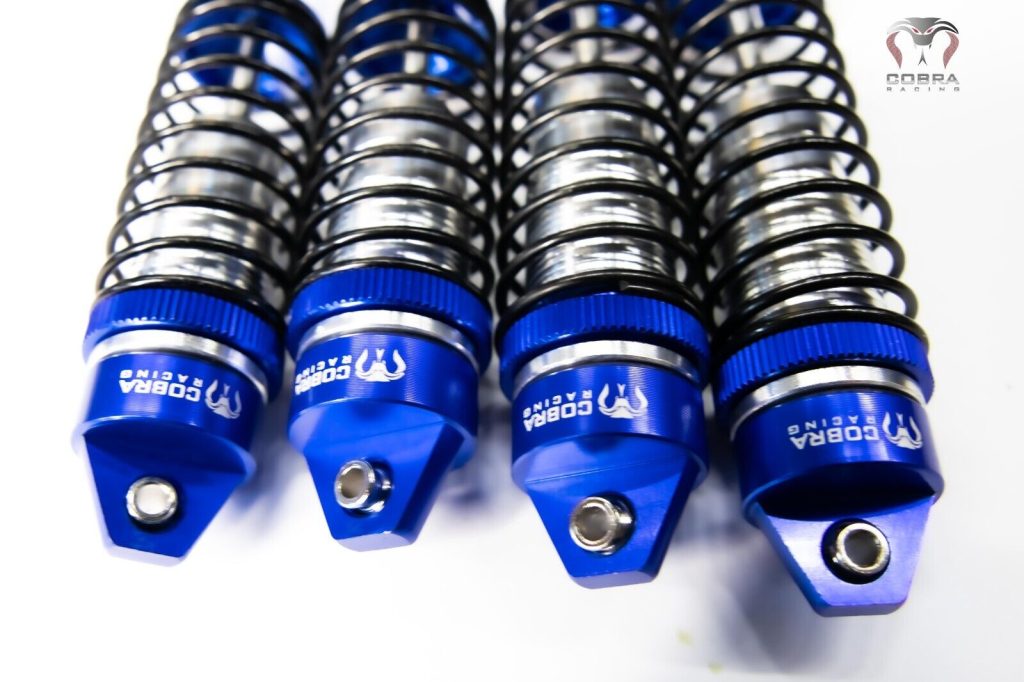
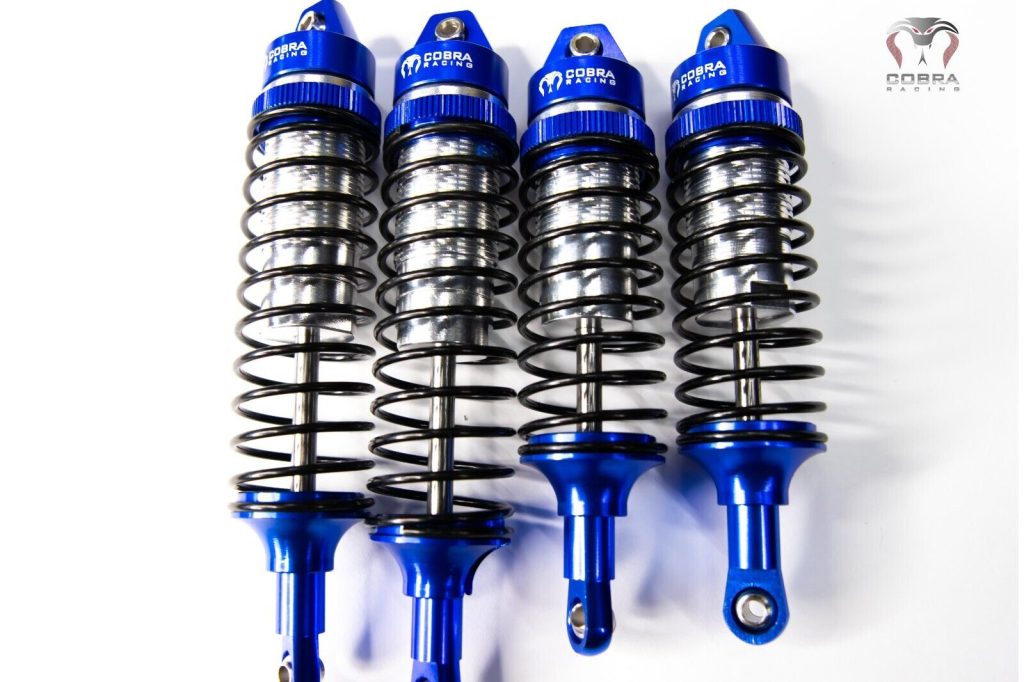
CR Blue Aluminum BigBore Shocks fits Traxxas 4×4 2WD (Front and Rear)
🏁 Performance Benefits of Properly Bled RC Shocks
When shocks are bled correctly, you’ll notice:
Smoother landings
Reduced chassis bounce
More predictable cornering
Better traction over rough terrain
Consistent left-to-right suspension response
This is especially noticeable on independent suspension platforms where balance matters, such as the Traxxas 1/10 lineup.
Proper bleeding also helps you:
Make accurate oil-weight tuning decisions
Evaluate springs correctly
Avoid unnecessary part swaps
In other words, bleeding lets the rest of your suspension setup actually do its job.
❌ Common Bleeding Mistakes to Avoid
Sealing the shock with the shaft extended
Rushing bubble release
Overfilling the shock
Pumping the shaft aggressively
Assuming new shocks are “pre-bled”
Even brand-new shocks often benefit from a proper bleed before installation.
📍 Where This Matters Most
This process is especially important if you:
Recently rebuilt your shocks
Changed oil weights
Notice inconsistent handling
If you’re working with platform-specific shocks — such as Slash 4x4 shocks or Arrma 1/10 shocks — the bleeding process is the same, even though mounting hardware and dimensions differ.
🧠 Final Thoughts
Bleeding RC shocks isn’t optional — it’s foundational.
You can have the right oil, the right springs, and high-quality shocks, but air inside the shock will undo all of it. Taking a few extra minutes to bleed shocks correctly transforms how your RC car handles, jumps, and tracks through rough terrain.
It’s one of the simplest suspension steps — and one of the most important.
⚡ Summary
Air inside RC shocks causes bounce, harsh landings, and inconsistency
Bleeding removes trapped air so damping works correctly
Always compress the shaft fully before sealing the cap
Let bubbles rise and disappear — don’t rush
Bleed screws help fine-tune pressure but don’t replace proper technique
Properly bled shocks improve handling on all RC platforms