RC Motor Cooling: How It Actually Works, Why It Matters, and Why Most Builds Get It Wrong
Most RC overheating problems aren’t mysterious.
They’re predictable, avoidable, and usually caused by bad assumptions.
Bigger motors don’t magically stay cool.
Higher gearing doesn’t forgive heat.
And “it feels warm” is not a measurement.
If you’re running modern 1/10 or 1/8 scale RC vehicles — especially Traxxas and Arrma platforms — motor cooling is not optional. It’s part of baseline setup, just like gearing, suspension, and drivetrain alignment.
That’s why we treat motor cooling as engineering, not accessories.
This guide breaks down:
how motor cooling actually works
why active cooling outperforms passive every time
what temperatures are safe (and what kills motors quietly)
how heatsinks, fans, and thermal paste really interact
and why proper cooling is one of the highest ROI upgrades you can make
No hype. Just physics.
Heat Is the Enemy — and It Always Shows Up the Same Way
Electric RC motors generate heat whenever electrical energy is converted into mechanical work. The harder you load the motor, the faster heat builds.
Common heat accelerators:
high gearing and speed-focused setups
larger or heavier tires
extended bashing sessions
warm ambient temperatures
limited airflow around the motor can
When heat builds faster than it can escape, three things happen:
Efficiency drops — voltage becomes heat instead of torque
Power fades — magnets lose strength as temps climb
Wear accelerates — bearings, windings, and insulation degrade
Heat doesn’t announce itself loudly.
It just shortens motor life until one day it’s done.
Examples of Cobra Racing RC Motor Cooling Fans:
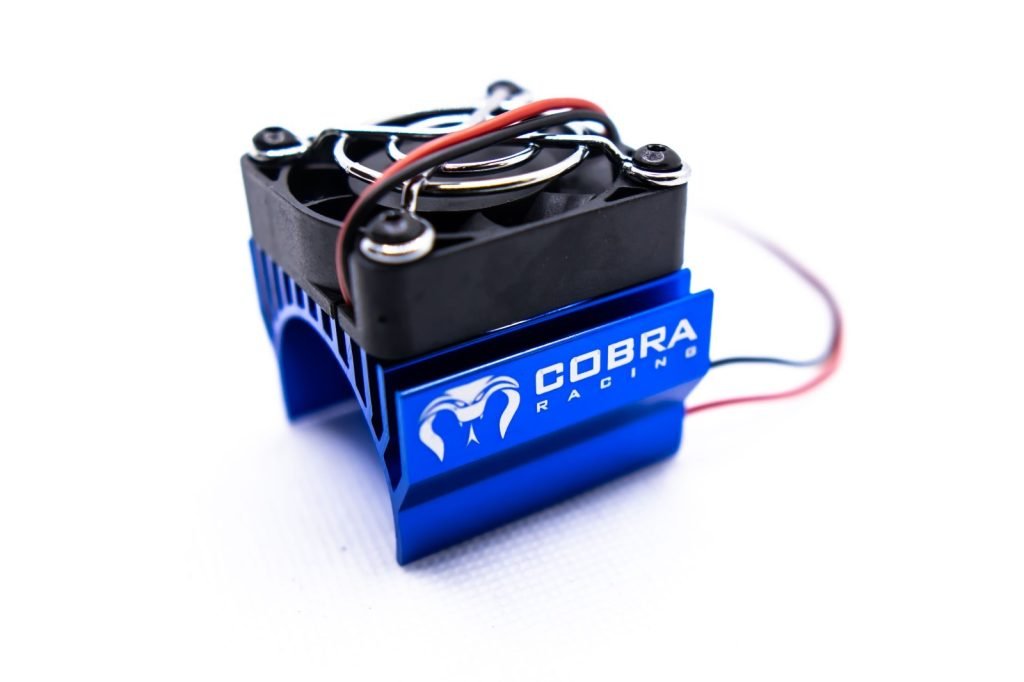
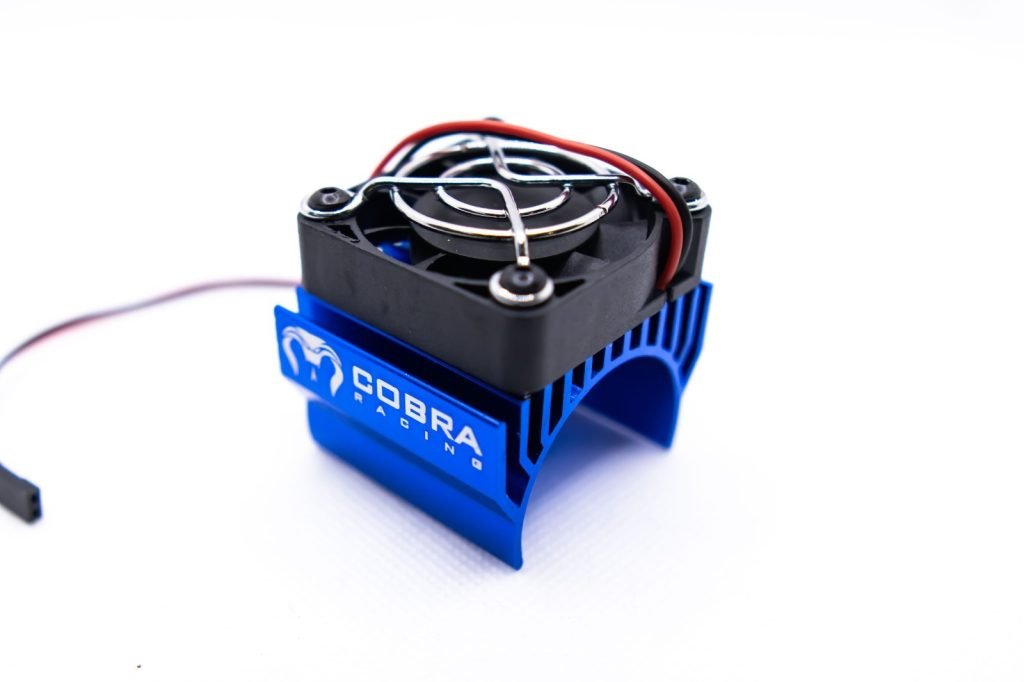
High-Performance Navy Blue RC Motor Cooling Fan for Traxxas, Arrma & More
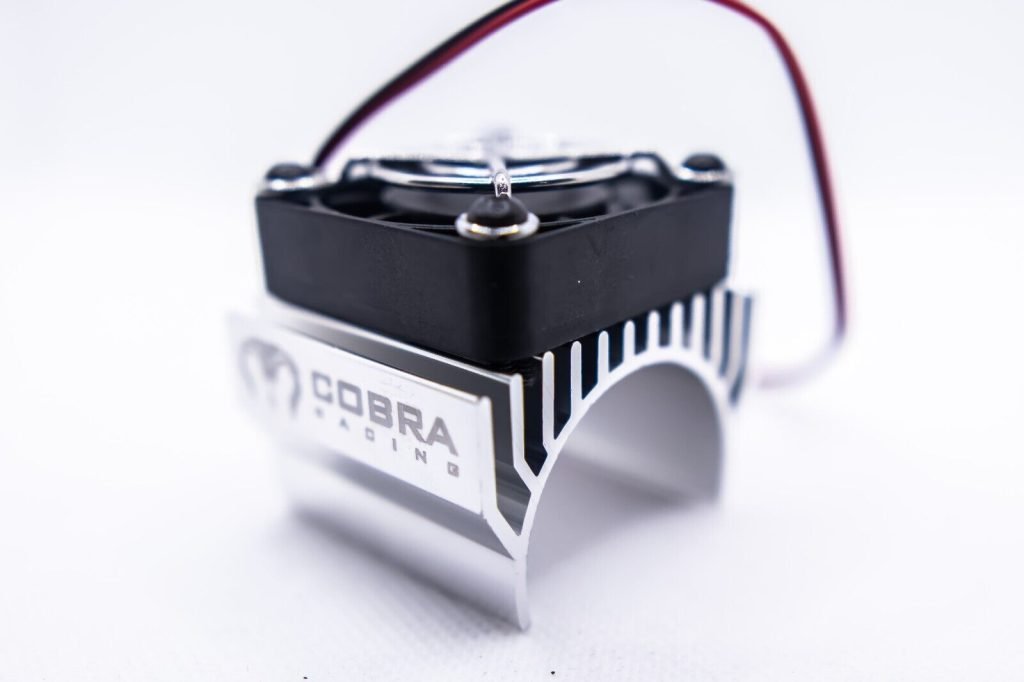
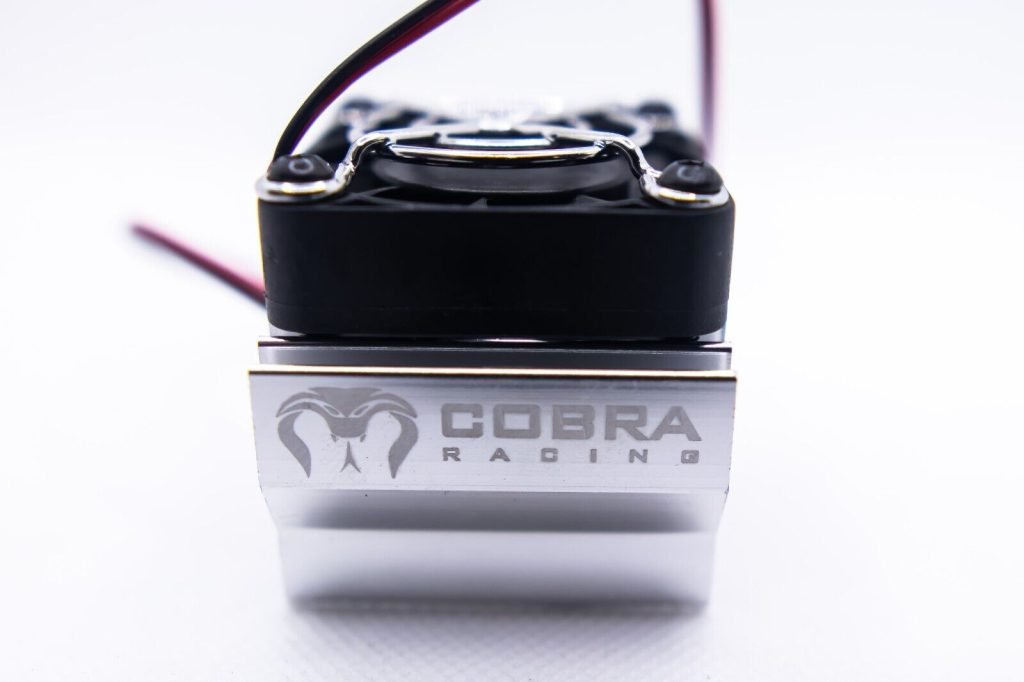
High-Performance Silver RC Motor Cooling Fan for Traxxas, Arrma & More
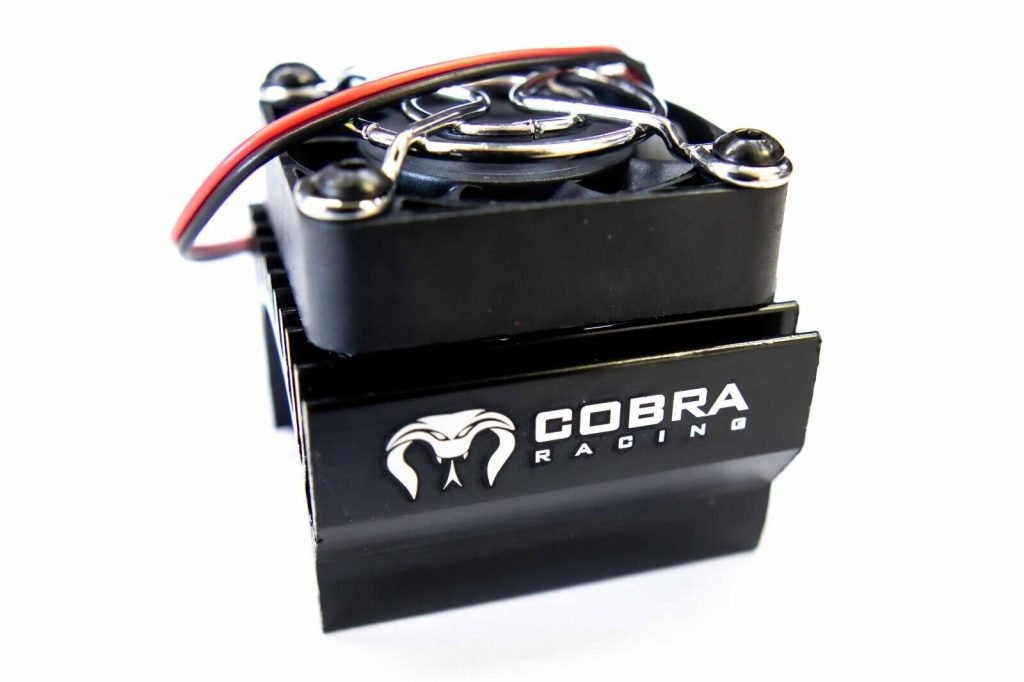
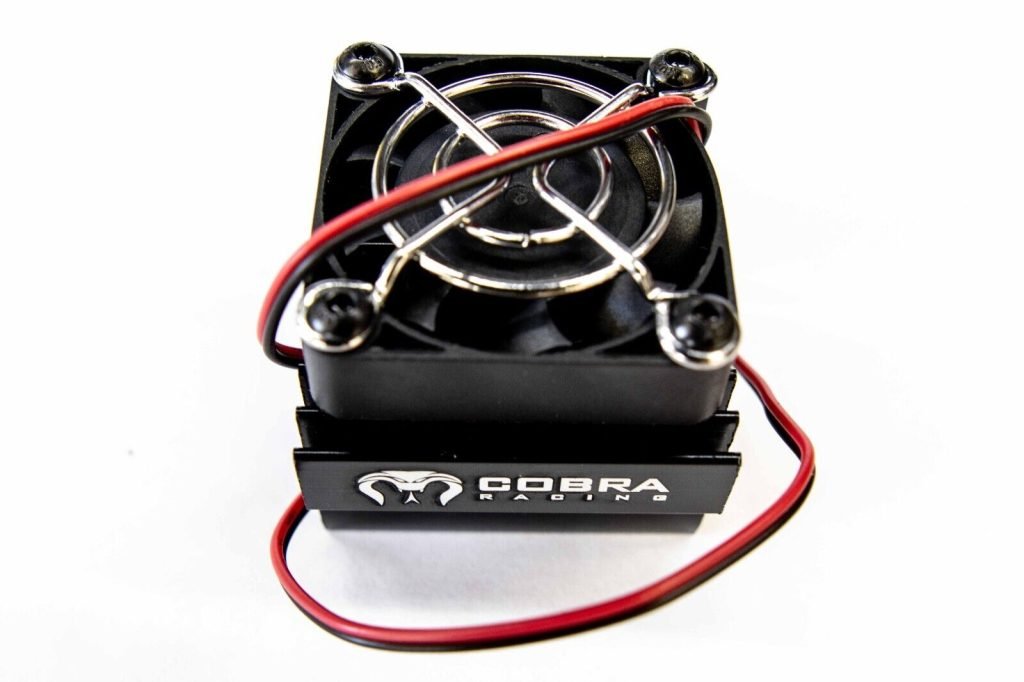
Cobra Racing’s Black Motor Cooling Fan for Traxxas, Arrma & More
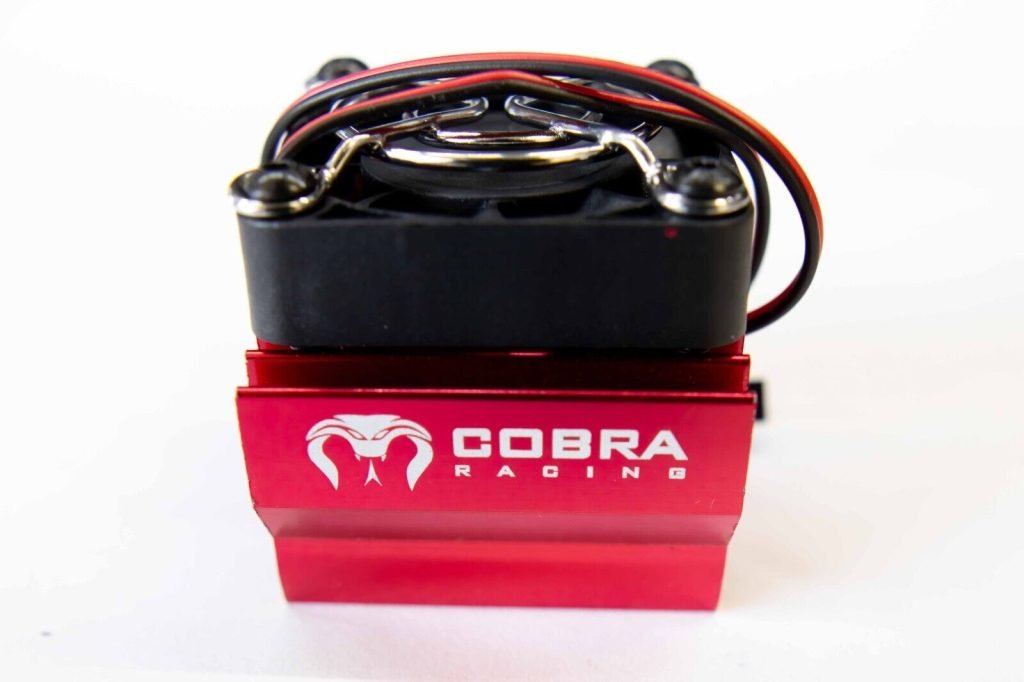
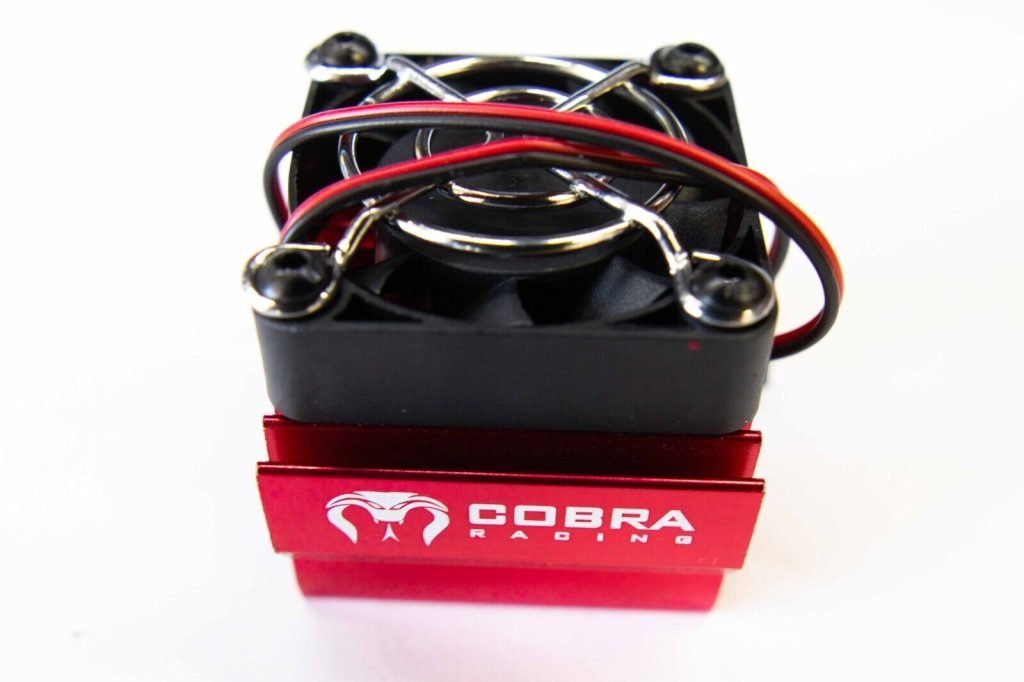
Aluminum Red RC Motor Cooling Fan for Traxxas, Arrma & More
Safe Operating Temperatures (Real Numbers, Not Guesswork)
For most modern 540, 550, and 1/8 scale brushless motors:
Ideal range: 140°F–160°F (60°C–71°C)
Acceptable upper limit: ~180°F (82°C)
Danger zone: 190–200°F+
Once you start touching 200°F:
magnet strength degrades
bearing grease breaks down
insulation lifespan drops hard
That’s not opinion. That’s materials science.
Passive Cooling vs Active Cooling (Why Fans Win)
Passive Cooling (Heatsink Only)
A heatsink increases surface area, allowing heat to dissipate into the surrounding air. This works — until airflow is limited.
At low speeds, during stop-and-go runs, or in tight chassis layouts, passive cooling stalls.
Active Cooling (Fan + Heatsink)
Active cooling forces airflow across the heatsink regardless of vehicle speed.
That’s the key difference.
By moving air across the motor can continuously:
heat is pulled away faster
thermal equilibrium stays lower
peak temps flatten instead of spiking
This is why active cooling is standard everywhere thermal management matters — electronics, automotive, aerospace. RC is no different.
You’ll see this philosophy reinforced across our entire RC fan ecosystem.
Heatsink Design: Why Fit and Contact Matter More Than Size
A heatsink doesn’t just “sit near” the motor.
It has to make proper contact.
Key design principles:
Clip-on tension reduces the air gap between motor can and heatsink
Less trapped air = better thermal transfer
Fin spacing must allow airflow through, not trap heat
Air is a terrible conductor of heat.
Aluminum is excellent.
The entire goal is minimizing the air gap so heat moves from motor → aluminum → airflow as efficiently as possible.
That’s why properly designed clip-on heatsinks outperform loose or decorative designs every time.
Thermal Paste: The Most Overlooked Upgrade in RC Cooling
Here’s the uncomfortable truth:
Even a perfectly machined heatsink never makes full surface contact with a motor can.
Microscopic gaps always exist.
Those gaps trap air.
Air blocks heat transfer.
What Thermal Paste Actually Does
Thermal paste:
fills microscopic gaps
displaces air
improves conduction between metal surfaces
This is standard practice in:
CPUs
power electronics
industrial motors
RC is no exception.
A thin layer of PC-grade thermal paste between motor and heatsink:
improves heat transfer
reduces peak temperatures
stabilizes thermal cycling
You don’t need a glob.
You need coverage.
This is one of the easiest ways to extract more performance from any active cooling setup.
Fan Performance: Why RPM and Placement Matter
A fan’s job is simple: move air.
But execution matters.
High-RPM fans:
maintain airflow at low vehicle speeds
prevent heat soak during repeated acceleration
stabilize temps when natural airflow is insufficient
Placement matters just as much:
airflow must cross the heatsink fins
dead zones kill efficiency
guards protect blades without choking airflow
This is why active cooling systems are engineered as fan + heatsink, not separate afterthoughts.
Color and Heat Dissipation (Let’s Kill the Myths)
You’ll hear a lot of nonsense about color and cooling.
Here’s the truth:
In passive radiation, darker surfaces emit heat more efficiently
In forced convection (fan-driven airflow), air movement dominates
In other words:
airflow and contact matter far more than color
finish choice has a minor effect compared to fan RPM and heatsink fit
That’s why different finishes can exist without changing performance.
Choose color for your build.
Choose engineering for cooling.
Real-World Results: What Active Cooling Actually Delivers
Internal testing across common 1/10 and 1/8 scale setups shows:
~20% reduction in peak motor temperatures with proper active cooling
Example:
uncontrolled run: 190°F
with active cooling: ~150°F
That temperature drop:
moves the motor out of the danger zone
stabilizes performance run after run
significantly extends component life
That’s not marketing.
That’s math.
Why This Matters for Traxxas and Arrma Platforms
Modern Traxxas and Arrma vehicles are powerful, heavy, and often geared aggressively from the factory.
They’re designed to move — fast.
That makes motor cooling a baseline requirement, not an upgrade.
This is why cooling discussions naturally live alongside:
Cooling is part of the system — just like drivetrain, suspension, and electronics.
It’s also why we consider it a tool, not an accessory
Cooling as Part of Baseline Setup (Not a Band-Aid)
We don’t treat cooling as something you add after problems appear.
It belongs in baseline setup — right alongside:
gearing checks
drivetrain inspection
suspension tuning
This mindset is why our cornerstone philosophy exists.
If RTR setups were perfect, motors wouldn’t cook themselves.
Reality says otherwise.
Final Take: Why We’re Confident Here
We don’t talk about motor cooling because it looks good on a product page.
We talk about it because:
we test it
we measure it
we understand the physics behind it
Motor cooling isn’t magic.
It’s contact, airflow, and thermal transfer done correctly.
When those three are handled properly, motors live longer, run harder, and stay consistent.
That’s the whole game.
For more deep-dive engineering content, setup philosophy, and no-nonsense RC tech breakdowns, the full archive lives here.
SUMMARY
heat kills motors quietly
safe range tops out around 180°F
active cooling beats passive every time
heatsink contact and airflow matter more than size
thermal paste is criminally underused
proper cooling drops temps ~20%
this isn’t optional on modern RC builds
That’s how it works.
That’s why it works.
That’s why we don’t guess.